Imagine wanting a goose so badly that you decide to drive 500 miles to North Dakota to get one. Now, imagine that there are no freeways, only dirt and gravel roads, you’re driving a Model T, and you actually come home with 15 giant Canada geese – Branta canadensis maxima, to be exact.
It was the 1920s, an era of flapper dresses, Prohibition, and The Great Gatsby. At the time, Canada geese were quite rare, having been driven towards extinction by over-hunting and habitat loss, and Dr. Charles Mayo decided that a small flock would bring just the right touch of wilderness and “up north” flair to his 3,000-acre family estate. Forty years later, when Dr. Harold Hanson of the Illinois Natural History Survey arrived at Mayowood for a visit, he was surprised to find that the Giant Canada goose, then thought to be extinct, was actually alive and well in Rochester, Minnesota, amidst a flock of nearly 600 birds.
Today, Canada geese are one of the most common and easily recognized charismatic megafauna in our state. There are 4 – 5 million Canada geese in North America, and nearly 25,000 of them spend their summers in the Twin Cities area, hanging out at parks and beaches, and wandering around in giant gaggles on whatever road you’re hoping to drive on.
Given their current abundance, you might be surprised to learn that Canada geese were a rare novelty in the 1920s. In fact, state and federal agencies actually worked together to breed and re-introduce them to the wild during the 1950s.
During the 1970s, several of Minnesota’s biggest philanthropic families – the Bells, Crosbys, Pillsburys and Hills – funded a re-introduction effort in the Twin Cities area, led by Professor Jim Cooper from the University of Minnesota. By the 1980s, however, these new goose populations had become so plentiful that Cooper’s students began rounding up metro geese from the Minneapolis Chain of Lakes to ship them out to other parts of the state. It turns out that turf lawns and stormwater ponds are the perfect habitat for Canada geese to grow and thrive.
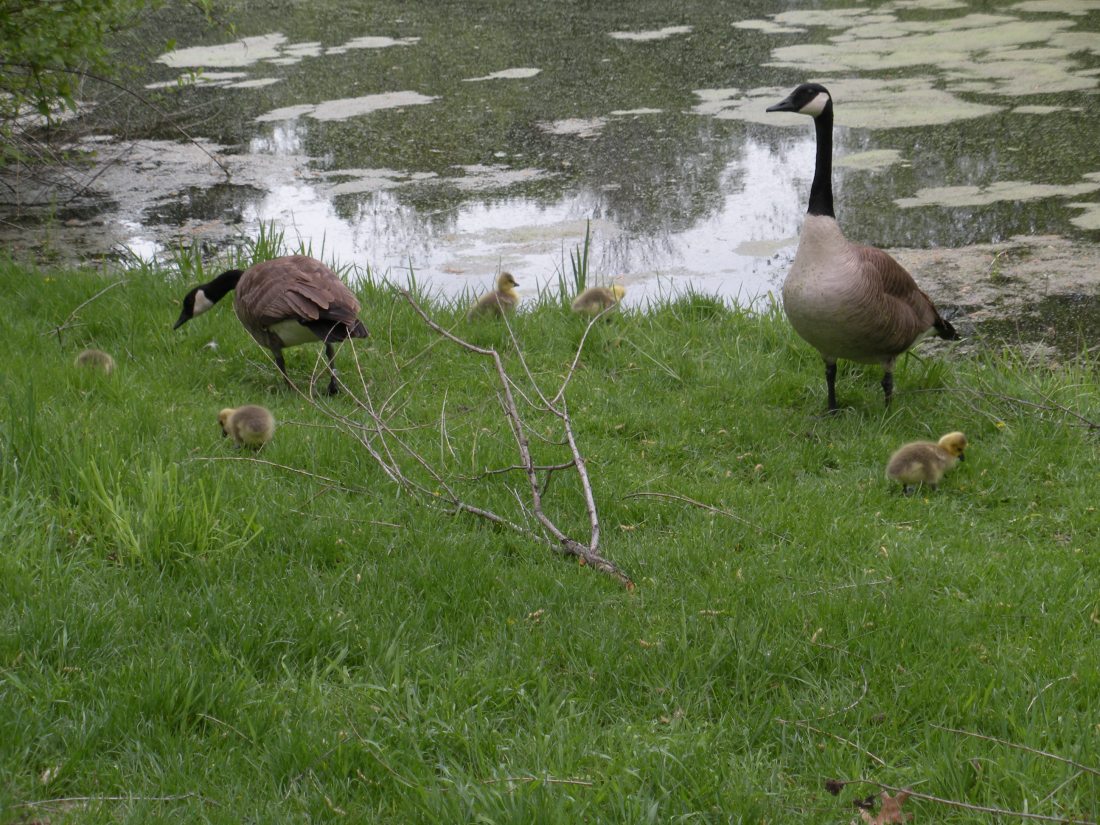
Canada geese are one of those animals that people either love or hate. They are easy to see and fun to watch, especially when mom and dad take their fuzzy little goslings out for a walk. Geese are a crowd favorite with kids and an always-welcome sign of spring. The goose (female) and gander (male) also tend to mate for life, which gives them a romantic allure, similar to swans and bald eagles.

On the other hand, they leave piles of poop and feathers wherever they congregate and contribute to phosphorus and E. coli pollution in urban lakes and ponds. It can also be downright terrifying to pass by a family of geese if you’re out for a walk in the park. The ganders will charge at you hissing and are frighteningly large up-close. Most urban park departments use a combination of annual round-ups, special hunts, and addling eggs to keep them from hatching in order to keep goose populations under control.
Though it might appear that all geese look alike, there are actually eleven recognized subspecies of Canada goose, ranging in size from three to 20 pounds. In general, the geese get smaller as you move northward, and darker as you go westward across the U.S. and Canada. It is also relatively easy to tell the difference between male and female geese when they are close together, as the males have longer necks and stand more upright, making them look much larger.

Goslings (baby geese) are born in late April and early May and grow for two to three months before they are able to fly. Coincidentally, most adult geese molt (shed) their flight feathers during June and are unable to fly until late July. This time of summer is all about waddling.
If you live near a lake or wetland and geese are driving you crazy, it might be a sign that you have too much lawn. Planting a buffer of native plants, and adding more areas with trees, shrubs, and native perennial gardens will help to discourage geese from congregating in your yard…and send them over to your neighbor’s lawn!

 East Metro Water